
(1) Yunnan International Joint Laboratory of Health Plant Resources Development & Yunnan Key Laboratory for Wild Plant Resources, Kunming Institute of Botany, Chinese Academy of Sciences, Lanhei Road 132, Heilongtan, Kunming 650201, Yunnan, China.
(2) University of Chinese Academy of Sciences, Beijing, China.
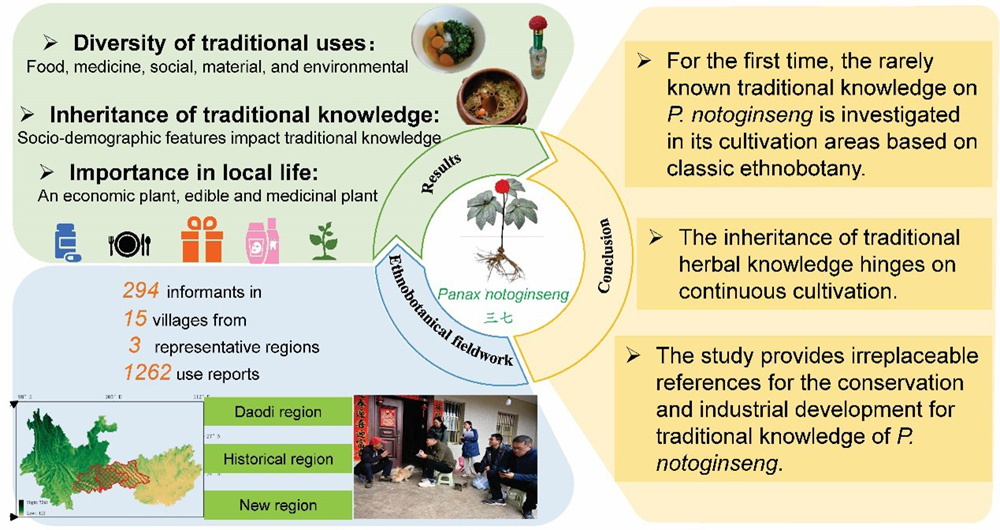
In this study, we use a classical ethnobotanical survey approach as well as a quantitative method to investigate the rarely known traditional knowledge on P. notoginseng in representative cultivation regions: historical region, Daodi region, and new region. For the first time, this work archives a comprehensive understanding on the traditional uses of Panax notoginseng and reveals that inheritance of traditional herbal knowledge hinges on continuous cultivation.
Notoginseng_01
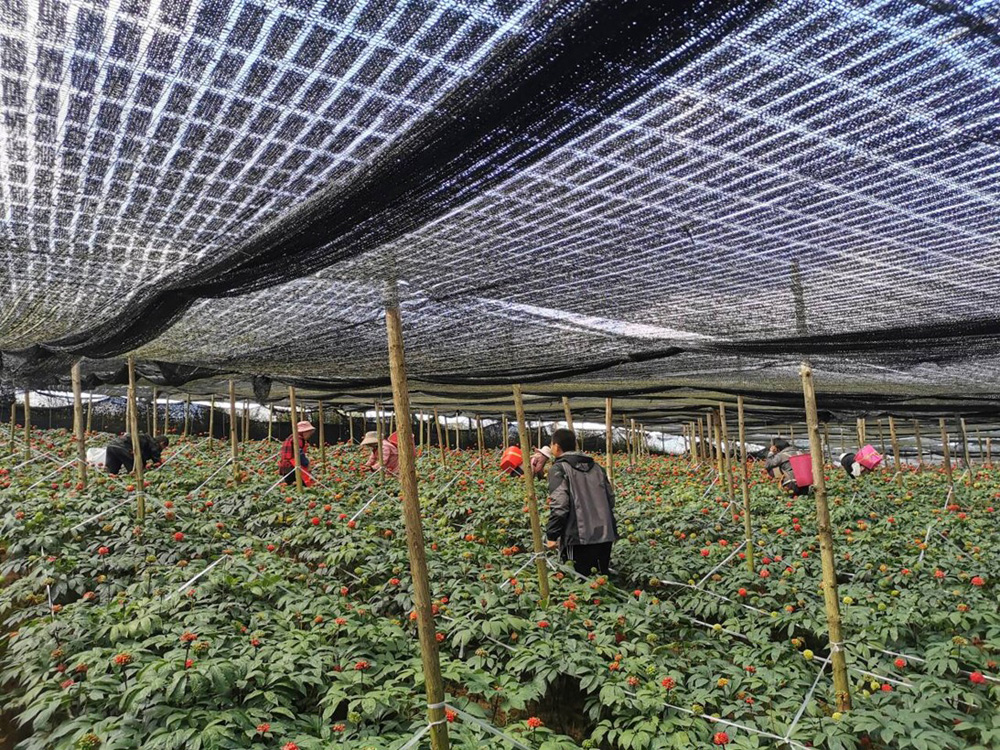
Panax notoginseng is native to southwestern China and is mainly grown on the slopes of mountainous areas. The locals call it Sanqi or Tianqi.

Notoginseng_02
The root and rhizome of P. notoginseng can be grounded and used internally for blood tonic and health care, and externally to treat bruises and stop bleeding.
Notoginseng_03
Notoginseng_04
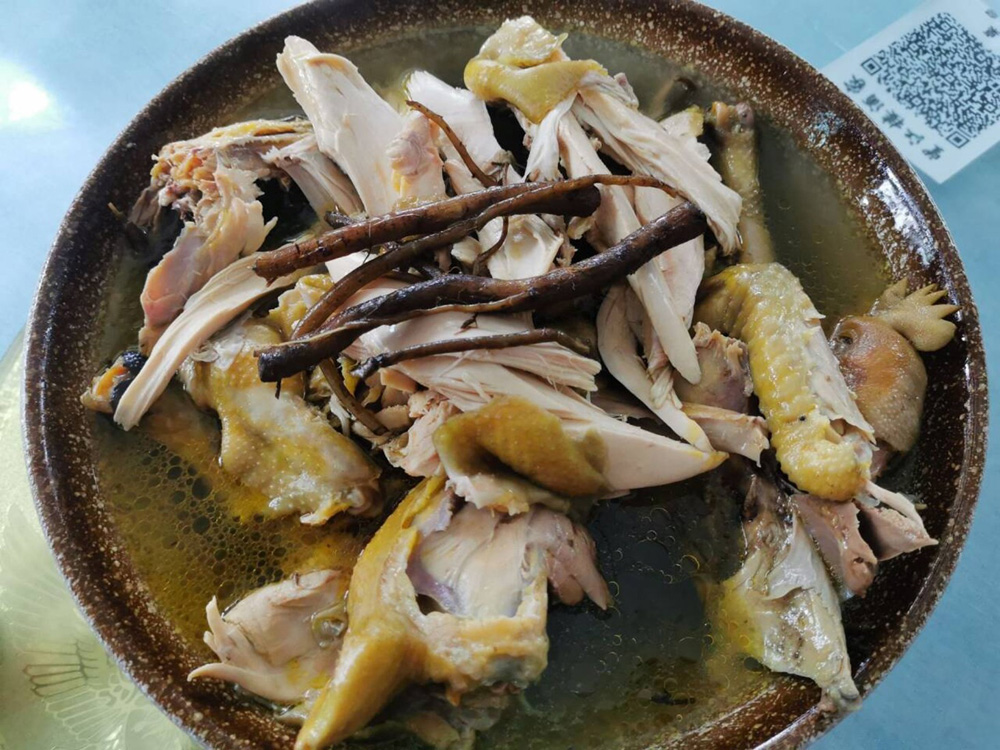
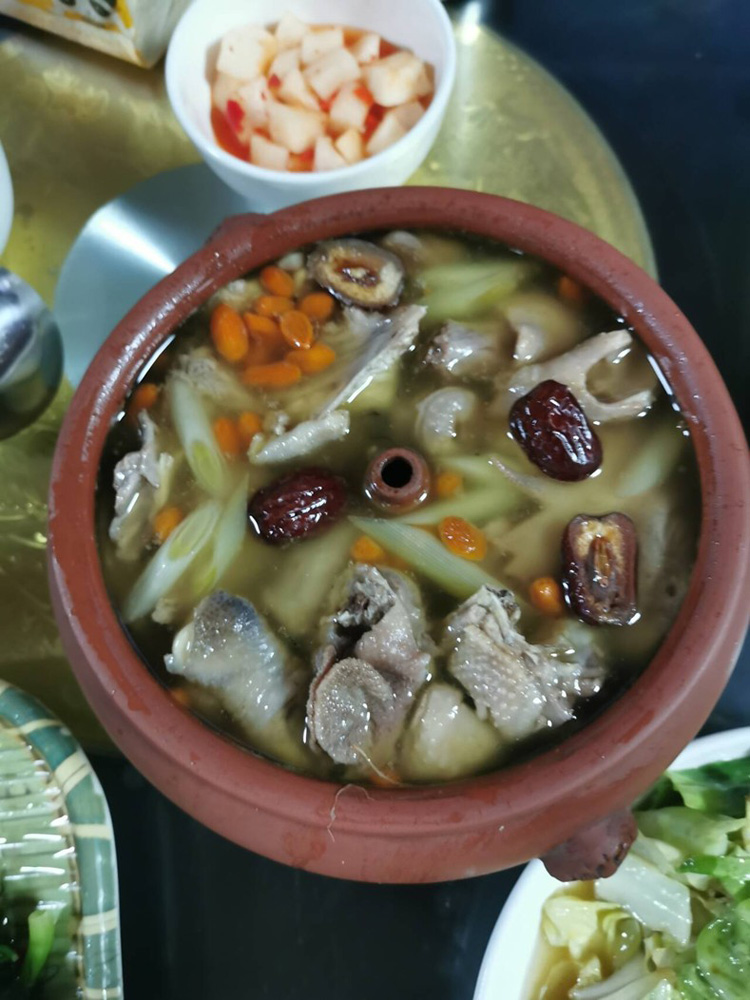
Of them, Panax notoginseng-steamed chicken (三七汽锅鸡,sān qī qì guō jī) is a popular dish in Yunnan.
Notoginseng_05
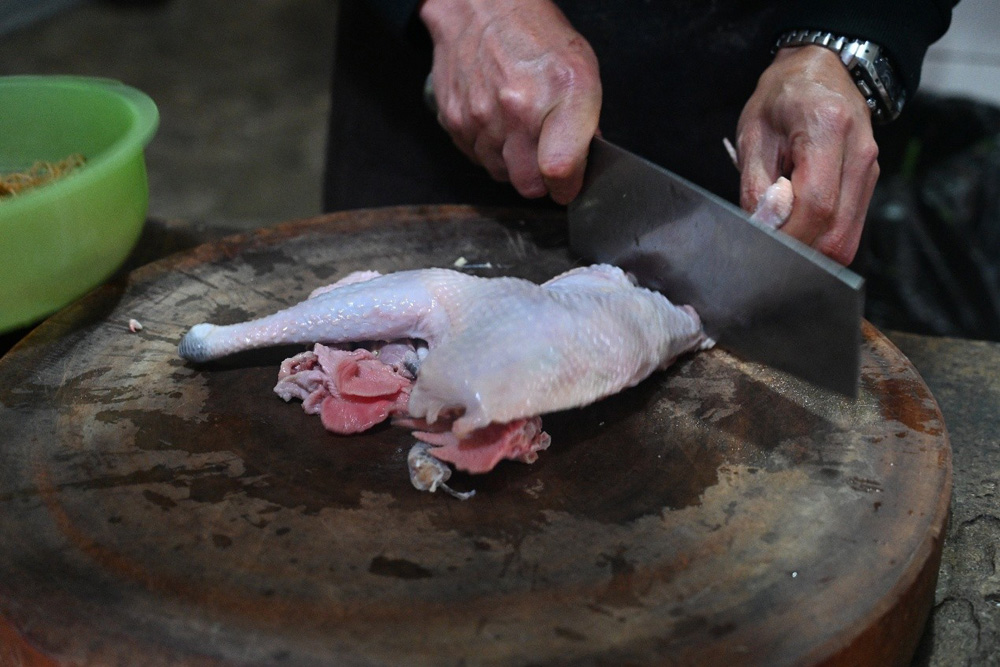
Firstly, clean and cut the chicken into pieces.
Notoginseng_06
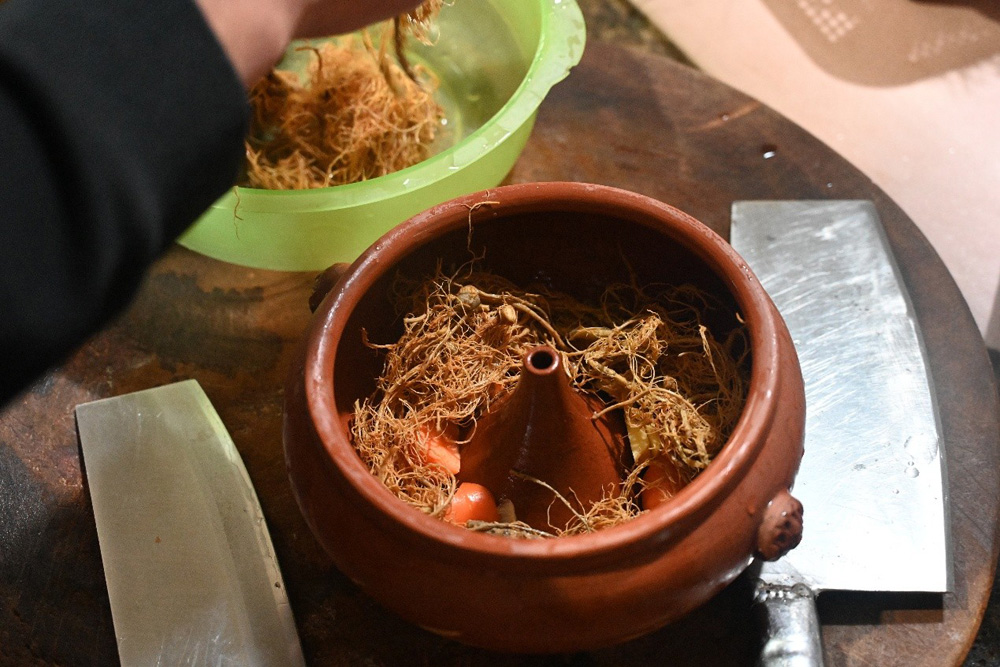
Then clean the fibrous root, slice the carrots, ginger and onions and spread them evenly over the bottom of the Qiguo (a traditional earthenware stewing vessel, usually made of purple earthenware from Jianshui, Yunnan Province).
Notoginseng_07
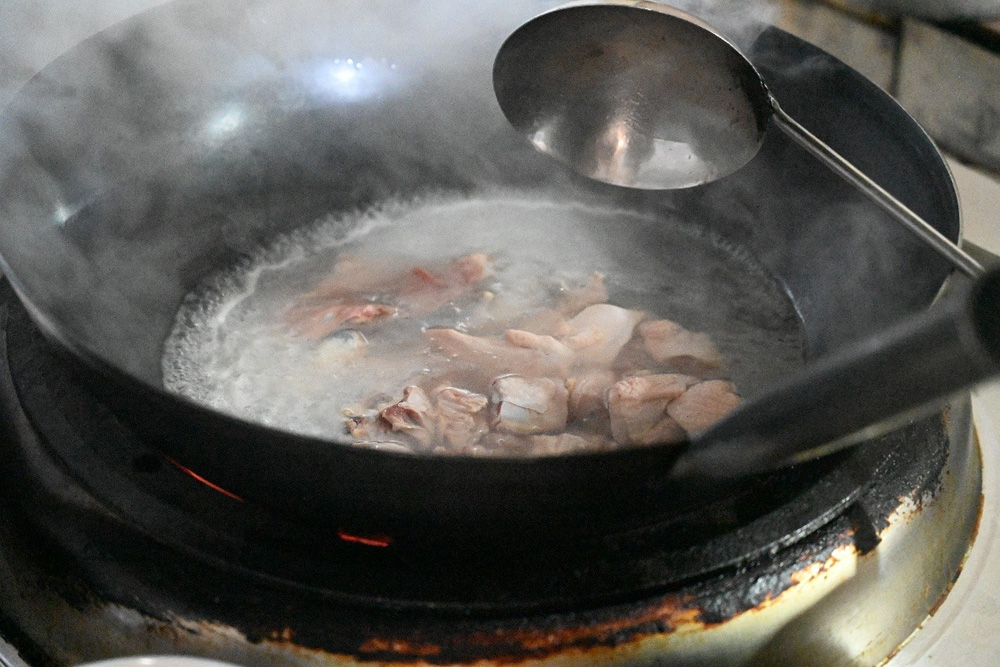
Blanch the chicken, skimming the foam…
Notoginseng_08
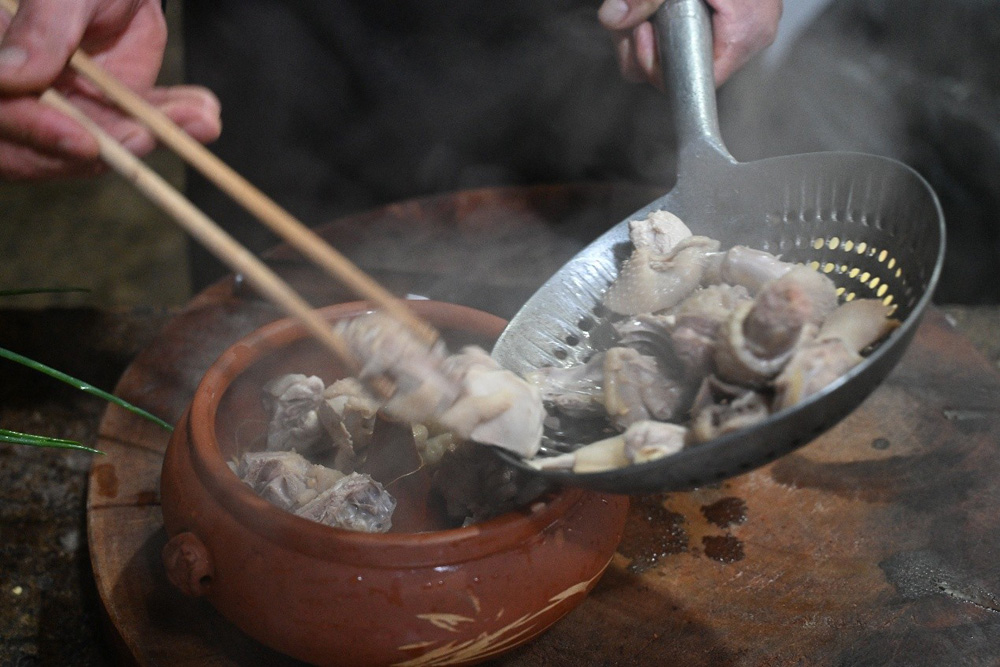
…and then lay the chicken on top of the Qiguo.
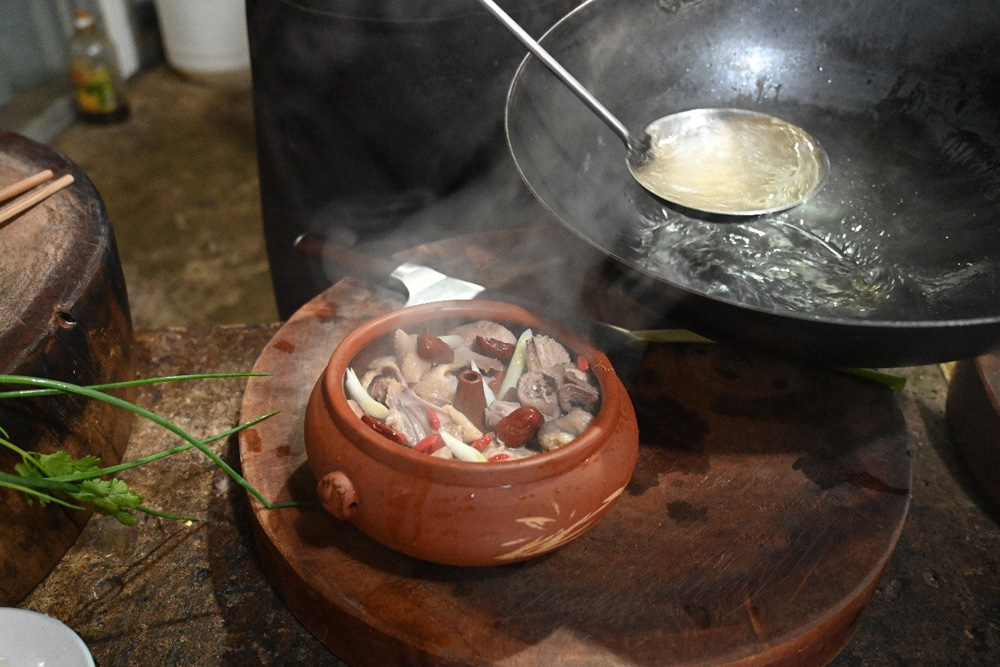
Notoginseng_09
Put in some dried goji berries, dried jujube fruits and scallions, and then put the blanched chicken stock to the Qiguo.
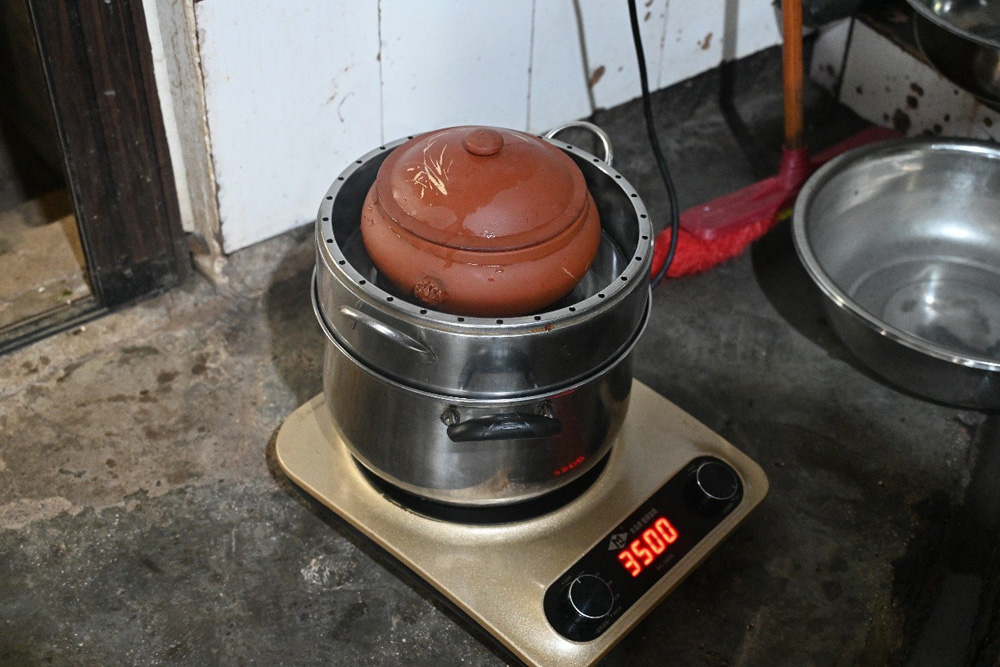
Notoginseng_10
Place the whole Qiguo into a heated steamer and steam for about 1 hour.
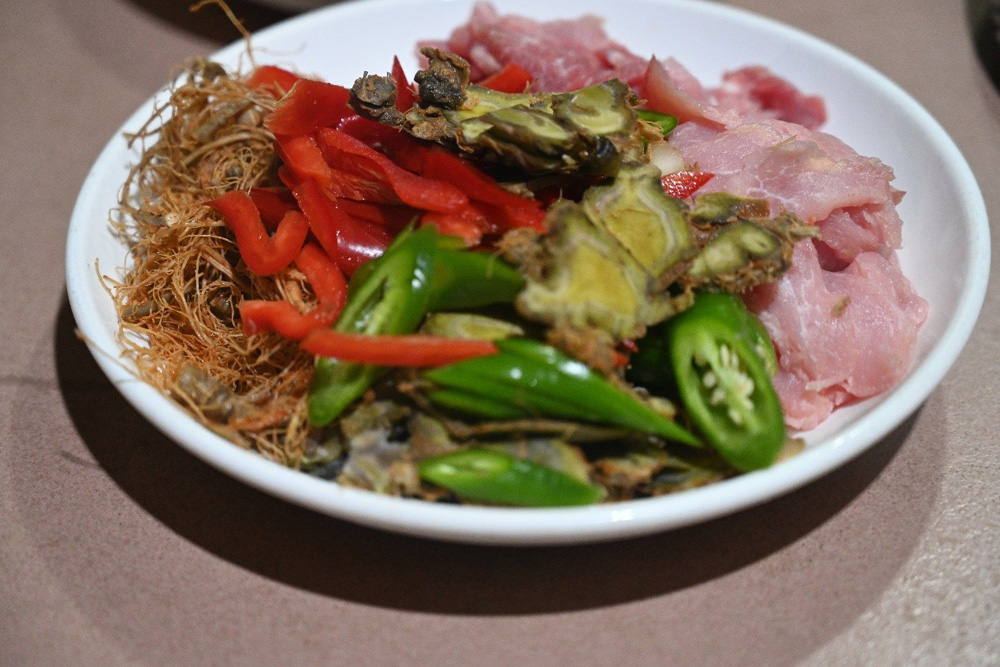
Notoginseng_11
The roots can also be stir-fried with pork.
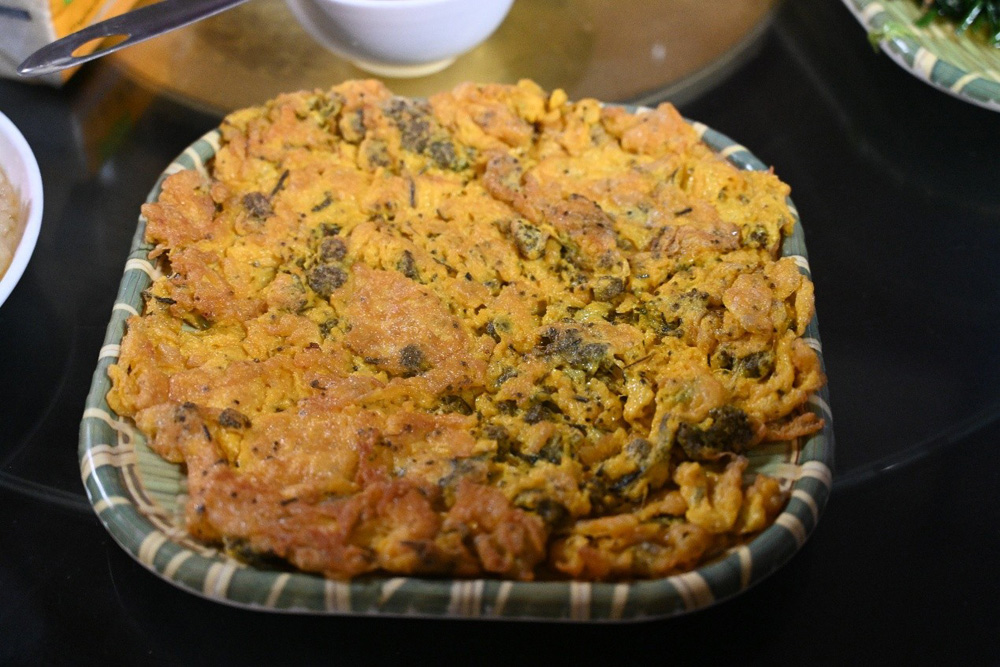
Notoginseng_12
Fresh or dried flowers can be used for making omelettes.
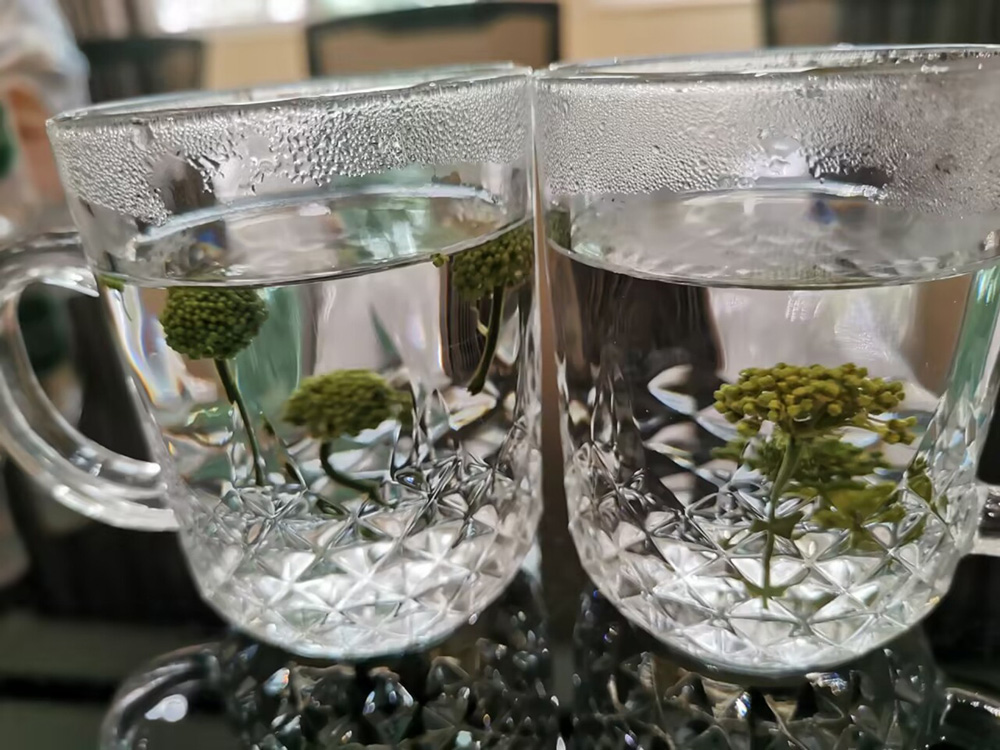
Notoginseng_13
…and making tea.
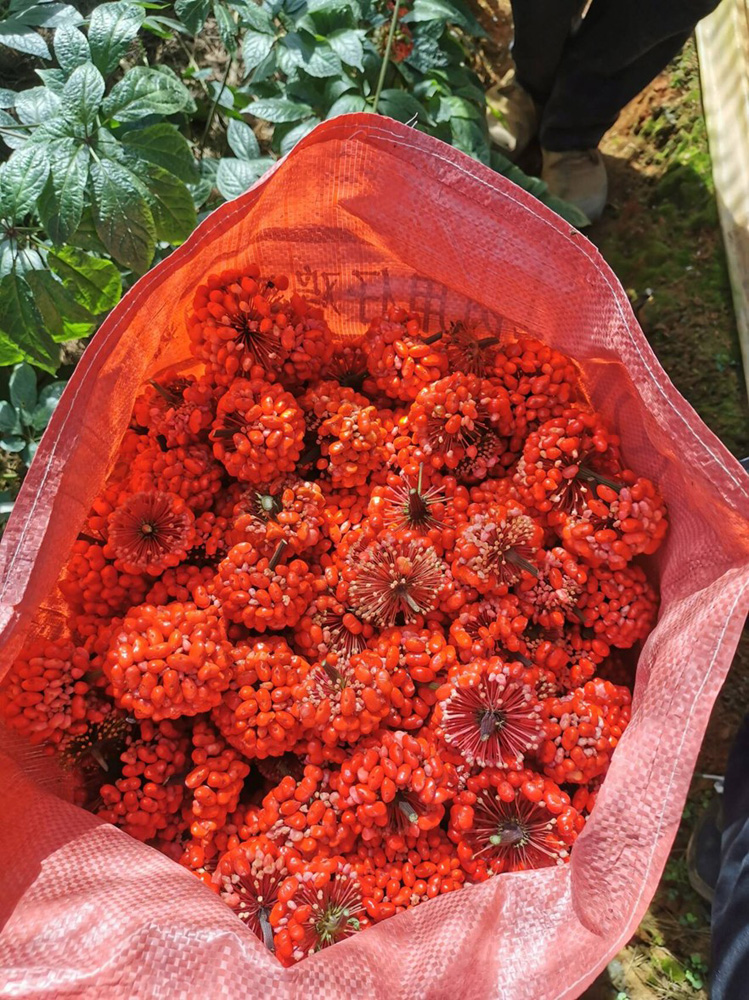
Notoginseng_14
Local people rarely utilize the seeds and generally use them for seedlings. According to legend, “The seeds of P. notoginseng cannot be eaten, and if you eat them, you will get sick. Even P.x notoginseng may disappear or there will be disasters.”
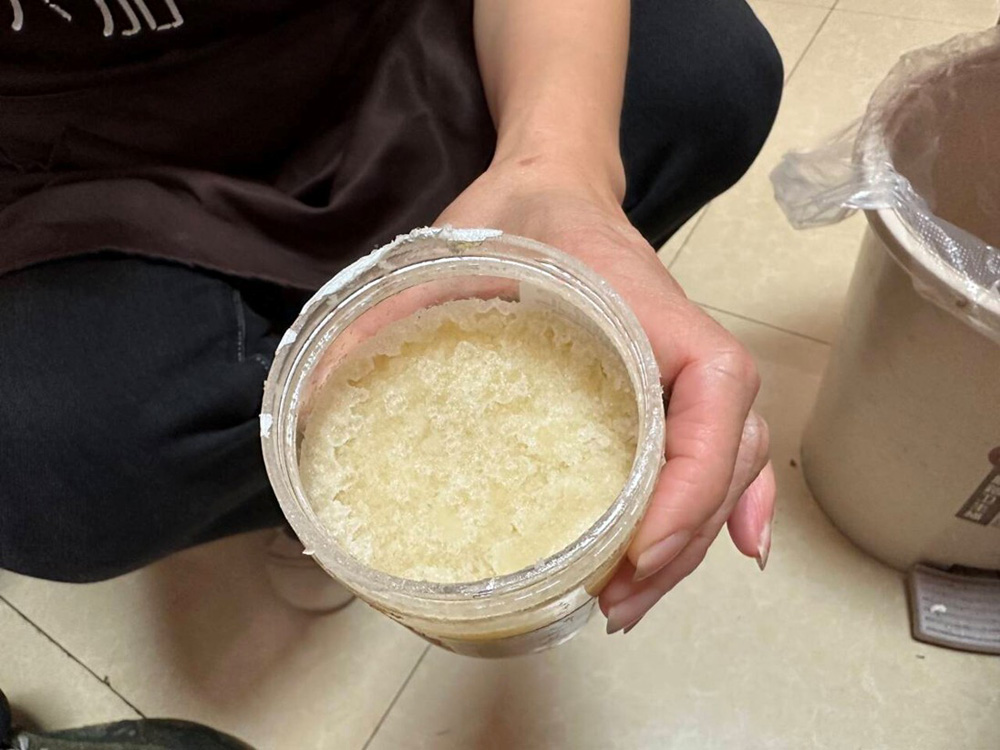
Notoginseng_15
However, one informant uses the oil extracted from the seeds to make hand cream.
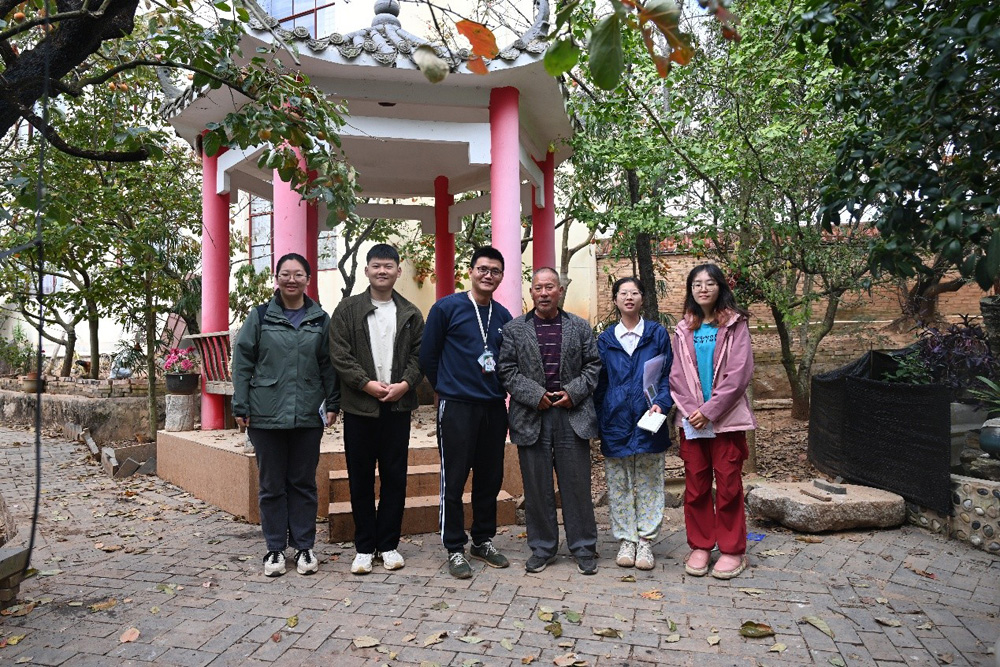
Notoginseng_16
The survey group.